Ticket to Ride Europe: Rules, Strategy & Expansions
Ticket to Ride Europe is a competitive railway-building game. Collect colored train cards, claim routes between cities and try to complete your secret destination tickets. Europe adds ferries, tunnels and stations to the basic Ticket to Ride system, so choosing when to commit your cards matters as much as deciding where to travel.
Researched game guide. Facts and rules checked on September 12, 2026. Strategy and complexity assessments are editorial analysis; this page does not claim hands-on testing. Read our editorial policy.
On this page: Game facts · Detailed guides · Who it suits · Rules overview · Strategy · Common questions · Expansions · Related games · Sources
Ticket to Ride Europe: quick game facts
| Attribute | Base-game information |
|---|---|
| Players | 2–5 |
| Publisher play time | 30–60 minutes |
| Publisher minimum age | 8+ |
| Designer | Alan R. Moon |
| First release | 2005 |
| Original publisher | Days of Wonder |
| Complexity | Light to medium — editorial assessment |
| Main mechanisms | Route building and set collection |
| Theme | Railways across Europe |
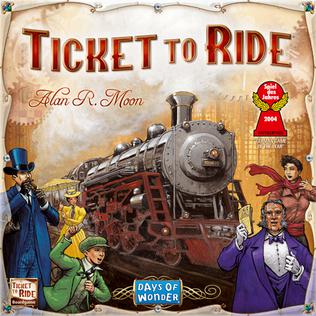
The publisher game page gives the player count, age and duration. This guide uses the classic Europe rules, with the complete 2019 English rulebook as its main reference. Box art, spare pieces and presentation can differ in refreshed or anniversary editions. The first-release year is cross-checked against BoardGameGeek’s catalog record.
Learn more about Ticket to Ride Europe
- How to play Ticket to Ride Europe — setup, cards, the four actions and final scoring.
- Tunnel rules — matching reveals, wild cards and failed attempts.
- Station rules — costs, borrowed routes and ticket examples.
- Europe strategy — overlapping tickets, bottlenecks and endgame timing.
Who Ticket to Ride Europe suits
Consider Europe if your group likes visible progress on a shared map and a choice between gathering cards and committing to a route. Destination tickets give each player a reason to care about particular connections without revealing the whole plan.
It may be a less comfortable choice for players who strongly dislike having a needed connection taken. Stations give you a recovery option for tickets, but the map remains competitive. A first teaching game is easier to assess when everyone understands that incomplete tickets subtract points as well as completed ones adding them.
Setup and the four turn actions
Each player begins with 45 usable trains, three stations, four train cards and four destination tickets: one long and three regular. Keep at least two starting tickets; the long ticket is not compulsory. On each turn, choose exactly one action.
- Draw train cards. Normally take two; selecting a face-up locomotive uses the whole draw action.
- Claim one route by paying a matching set of cards and placing trains on its spaces.
- Draw destination tickets. Draw three when available and keep at least one.
- Build one station. The first costs one card, the second two cards of one color and the third three cards of one color.
How the game ends and scores
When a player finishes a turn with two or fewer trains, every player, including that player, gets one final turn. Add route points and completed tickets, subtract incomplete tickets, and add four points for each unbuilt station. The European Express award gives ten points for the longest continuous path, shared by tied qualifying players. The highest total wins.
Ticket to Ride Europe strategy: protect the bottleneck
Editorial analysis: Start by finding the short, contested connection that your tickets depend on. A long route may give an attractive immediate score, but it does not replace an irreplaceable link elsewhere in your network. Ask what an opponent could take before your next turn.
Collecting cards conceals your plan and gives you flexibility. Claiming a critical route protects access but also shows other players where you are building. Treat that timing as a choice, rather than following a blanket instruction to reveal nothing until your entire ticket is ready.
Keep a reserve for an essential tunnel. A failed attempt does not cost the cards initially offered, but losing a turn can still allow another player to claim a different connection you need. The important risk is not only the extra cards; it is what the rest of the table can do while you wait.
A station is a recovery tool with a cost. Compare the value of the ticket it would rescue with the cards, turn and four unused-station points you would give up. For example, saving a ten-point ticket changes it from a ten-point penalty into a ten-point reward: a twenty-point swing before station costs. Check that the one borrowed route actually completes the connection.
Draw more tickets when your existing network has a realistic chance to serve them and enough turns remain to repair a miss. This is strategic reasoning from the scoring system, rather than a claim about measured win rates.
Common Europe rules questions
How do tunnels work?
Offer the normal route payment, then reveal three train cards. Each matching color or locomotive can require one extra matching card or locomotive. If you cannot or choose not to pay, recover your offered cards and end your turn. When the offered payment uses only locomotives, only revealed locomotives increase the cost.
How do ferries work?
A ferry requires at least the number of locomotives pictured on it. Pay the remaining spaces with a set of one color, with locomotives allowed as wild cards.
What does a station let you borrow?
For destination-ticket scoring, a station can use one opponent-owned route entering or leaving its city. It does not claim that route or add it to your longest continuous path. If it serves several tickets, the same borrowed route must serve them all.
Are both sides of a double route available?
With two or three players, claiming one side closes the other side. With four or five, both can be used, but a single player can never claim both sides.
Does a blind-drawn locomotive use both draws?
No. A locomotive drawn from the face-down deck counts as one card. The special restriction applies to selecting a face-up locomotive.
Expansions and other Ticket to Ride games
Europa 1912 requires a Ticket to Ride base game. Its Europe tickets include three variants; warehouses and depots add an optional mechanism that can be used on other maps. The Europe tickets themselves belong to the Europe map.
An expansion map is different from another standalone Ticket to Ride game. Read the requirements on the specific box: owning one Europe edition does not make every product in the series an interchangeable expansion.
Where this game fits in our recommendations
Compare the decision, group size and rules demands with other games we cover. These are researched editorial shortlists; they do not claim a tested best player count.
- Beginner board game choices — compare the teaching hurdle and who this game may suit.
- Board games for two players — compare official setup changes and the kind of interaction.
Explore related game guides
These connections highlight a shared mechanism or planning question. Each game has its own rules and edition notes.
- Catan — Compare route building with resource production, settlement placement and bargaining.
- Rebirth — Explore a shared-map placement game with contested connections and settlements.
- Splendor — Compare card-set collection for routes with gem collection for purchases.
- Browse the game library for all published game hubs.
Find complete teaching articles in our how-to-play guides, or explore strategy guides by game and decision.
Sources and edition notes
- Days of Wonder: Ticket to Ride Europe
- Classic Europe: complete English rulebook (2019)
- Refreshed Europe: publisher-hosted English rules file (setup and actions)
- Europe 15th Anniversary: English rulebook (scoring cross-check)
- Days of Wonder: Europa 1912
Correction note — September 12, 2026: Restored the missing station action, clarified station scoring and tunnel costs, and removed the incorrect classification of Nordic Countries as a map expansion. Removed an undated rating.